A Field Guide to Pacific Heights
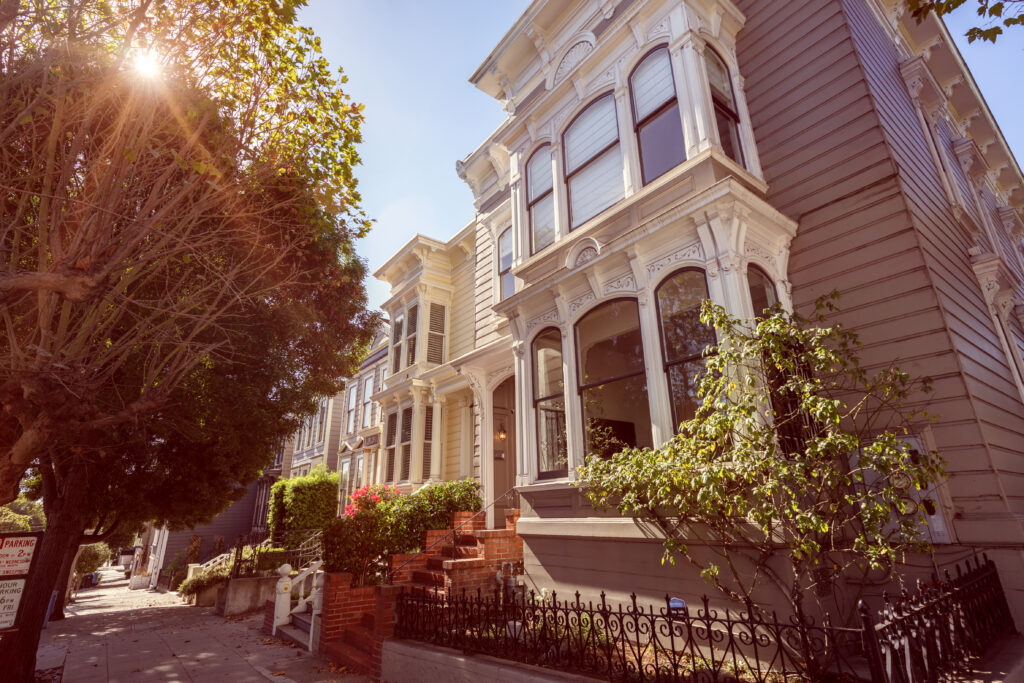
The views get the attention. The routine is what keeps people here.
If you’ve ever driven through Pacific Heights and slowed down to stare at the houses, you’re not alone. The neighborhood sits on one of the highest ridges in the city, and the architecture kind of demands your attention. Massive Victorians, mansion-sized Edwardians, the occasional French chateau that looks like it got airlifted from another country and nobody questioned it.
But the thing people who actually live here talk about isn’t the real estate. It’s the routine. Dog owners at Alta Plaza every evening around five. The line out the door at Jane on Fillmore on a Saturday morning. Runners on the Lyon Street Steps before most of the city has had coffee. Walk through it on a weekday and it feels more like a quiet residential neighborhood than anything else
The neighborhood runs roughly from Van Ness on the east side to Divisadero on the west, and it sits high enough that it’s actually above the fog line most days. Clearer skies than you’ll get in a lot of the city, which sounds like a small thing until you’ve lived somewhere foggier.
A Little History
Pacific Heights as we know it today is largely a product of 1906. When the earthquake and fire tore through the city, a lot of wealthy residents who had lost their homes in Nob Hill looked up at the ridge and noticed that much of Pacific Heights had made it through intact. So they rebuilt here, and they built big. That survival is the reason the neighborhood looks the way it does now — block after block of Victorian and Edwardian homes that have been standing for over a century.
One of the best ways to actually feel that history is the Haas-Lilienthal House on Franklin Street. It was built in 1886 by a Bavarian Jewish immigrant family, survived the earthquake, and has been open to the public as a museum ever since. It’s the only home of that era in the city where you can walk through the original rooms with the original furniture still inside. Guided tours run on Wednesdays and Saturdays, and SF Heritage leads walking tours of the neighborhood starting from the house every Sunday. If you’ve lived in Pac Heights for years and never been, it’s worth the afternoon.
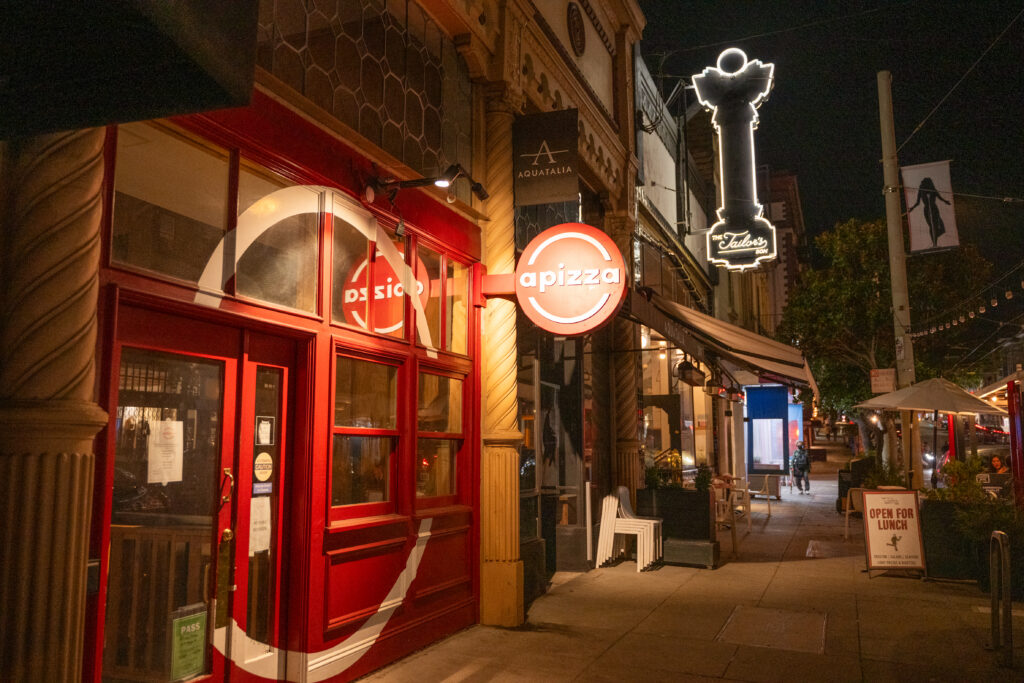
Filmore Street has it all
Fillmore Street is short but it’s stacked. Within a few blocks you’ve got everything from a morning bagel spot to a Michelin-recognized tasting menu, and most of it has been around long enough that the staff knows the regulars by order. A few worth knowing:
Jane on Fillmore — Two stories of consistently packed seating, solid iced lattes, and pastries that are the real draw — the coffee cake in particular. Good for a solo morning or a catch-up that stretches longer than expected.
B. Patisserie — A date-night go-to on Fillmore, known for chicken liver mousse, duck confit, and a $73 three-course tasting menu with a chocolate mousse dessert that regulars describe as one of the best meal-enders in the city.
State Bird Provisions — A Michelin-recognized California restaurant on Fillmore known for its small plates and dim sum-style carts. Reservations fill fast; the walk-in counter is your best bet for a spontaneous visit.
Florio Bar & Café — An intimate corner spot on Fillmore with marble checkerboard floors and warm lighting, serving seasonal bistro fare — steak frites, house-made mozzarella, roast chicken. Feels like Paris managed to open a place on a residential SF block.
Boichik Bagels — The Berkeley-based bagel shop brought their New York-style operation to Fillmore, and the neighborhood rejoiced. There’s a hidden back patio for lingering, or grab your everything bagel for the walk.
After Dark
Pacific Heights skews more quiet evening than late-night scene, which is exactly what a lot of people want from it. The options that do exist tend to be good.
The Snug — A stylish bar and restaurant on Fillmore that feels lively and intimate at the same time, with creative cocktails and a rotating craft beer list. The vibe is refined but never pretentious, which is essentially the neighborhood’s whole personality.
Sheba Piano Lounge — An Ethiopian restaurant on Fillmore with live music most nights. One of those places that’s genuinely hard to categorize and better for it.
Verve Wine — A neighborhood wine bar that draws a regular local crowd. The kind of place you walk past and get pulled in.
And then there’s The Fillmore itself — the legendary concert venue on Geary that’s been launching careers since the 1960s. It’s technically just south of Pac Heights proper, but it’s part of the neighborhood’s identity in a way that’s hard to separate.
Mark Your Calendar: Fillmore Jazz Festival — July 4–5, 2026
This one’s coming up fast and it’s worth clearing your weekend for. The Fillmore Jazz Festival is the largest free jazz festival on the West Coast, and it takes over twelve blocks of Fillmore Street between Eddy and Jackson Streets. This year’s 2026 lineup features 30+ acts across three stages, each named for a jazz legend — the Miles Davis Stage, the Tony Bennett Stage, and more — running 10 a.m. to 6 p.m. on both days. Free admission, live music, food vendors, local art. One of those San Francisco events that actually lives up to the reputation.
Getting Outside
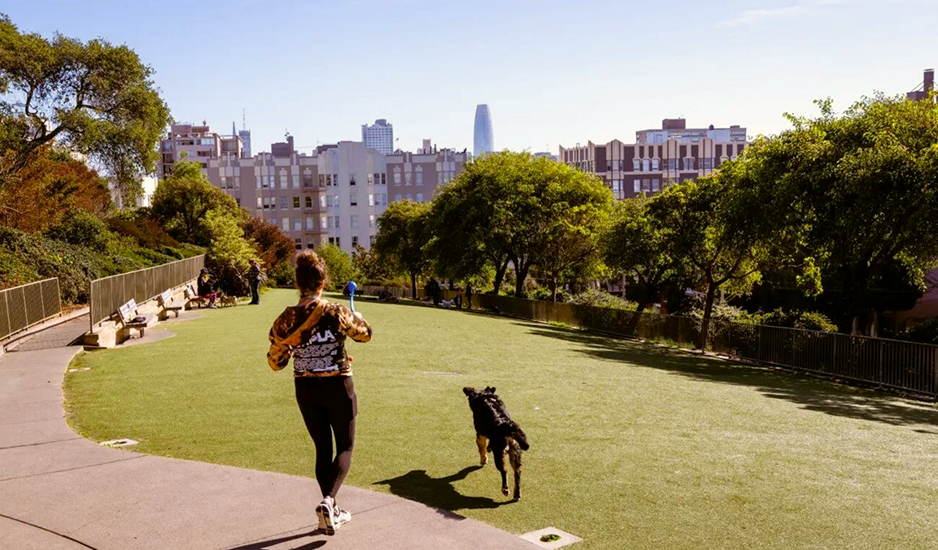
Two parks anchor the neighborhood and they’re both worth knowing.
Alta Plaza Park — A 12-acre park at the top of Pacific Heights with tennis courts, a playground, and terraced lawns that offer sweeping views toward the Marina, Alcatraz, and Sutro Tower. Every evening around 5, people bring their dogs for informal play sessions; it’s become one of those neighborhood rituals that nobody organized but everyone shows up for.
Lafayette Park — Spend one sunny afternoon here and you’ll understand why the people who know about it keep coming back. It’s the kind of park that feels like a secret even though it’s sitting right in the middle of one of the most well known neighborhoods in the city. Huge open lawns, mature trees that actually give you shade, and views that remind you why people put up with San Francisco rent. It’s quieter than Alta Plaza, less of a scene, and better for it. Bring a blanket, grab something from Fillmore Street on the way, and plan on staying longer than you expected.
The Lyon Street Steps — 332 steps from Broadway down toward the Marina, with views of the Palace of Fine Arts dome, the bay, and some of the most spectacular private gardens in the city lining the route. Locals use it for training; everyone else uses it for the view at the top.
Getting Around
The neighborhood is walkable in a way that rewards the walker — errands, coffee, dinner, and a park are all within a few blocks for most residents. For transit, the 1-California and 38-Geary bus lines are nearby, along with Muni routes 24, 28, 43, and 45, and the California Cable Car line connects to downtown. Downtown, the Marina, Japantown, and the Presidio are all under 15 minutes by bus or on foot.
What Makes It Pac Heights
Pacific Heights is one of those neighborhoods where people land and just… stay. Not because they have to, but because it’s hard to imagine somewhere better. You’ve got two parks that feel like extensions of people’s backyards, a street full of restaurants where the owners actually know their customers, and blocks that are quiet enough to feel like you live somewhere real. It’s a big city neighborhood that somehow still feels like a neighborhood. People say hi. Dog owners know each other by name. The same faces show up at the same spots on the same mornings. That kind of thing is harder to find in San Francisco than it used to be, and Pac Heights has held onto it.
Thinking About Living Here?
If you’re exploring Pacific Heights and want to see what’s available, you can browse our current apartments in the neighborhood here: