
How to spot a rental scam in San Francisco
Test yourself
Real or scam?
Eight listings. Some are real. They get harder as you go.
Message from the lister
Your result
The five-minute check
- Reverse-image-search the photos.
- Paste the address into Google, Zillow, and Redfin.
- Verify the person, not just the apartment. Pull the owner from SF property records, or the license from the California DRE, then call the brokerage’s main line.
- Pay by ACH, check, or card. Never wire, gift card, or crypto.
The short version: Tour in person before you pay. Verify the landlord separately from the apartment. Reverse-image-search the photos. Never wire money, send gift cards, or pay by crypto. If a deal feels too good or too rushed, that’s your answer.
Looking for an apartment in this city is a job in itself. You check listings at work, you check them in bed, and by the time you reply to something good it’s been taken since noon. Losing a month’s rent on top of that to someone who never owned the place is not something anybody has room for.
It happens a lot, and it happens to younger renters most. The FTC found people between 18 and 29 lose money to rental scams three times as often as older adults. Craigslist isn’t really where it’s happening anymore either. About half of reported rental scams now start on Facebook, usually Marketplace or one of the sublet groups.
Why are rental scams so common in San Francisco?
Scams work best on people who are stressed, moving fast, and unsure what’s normal. That’s most renters in this city. The usual hook is a place priced 20 to 30% under market in a neighborhood you actually want. If you’re new to the Bay, it looks like you finally caught a break. You didn’t. That gap is the bait.
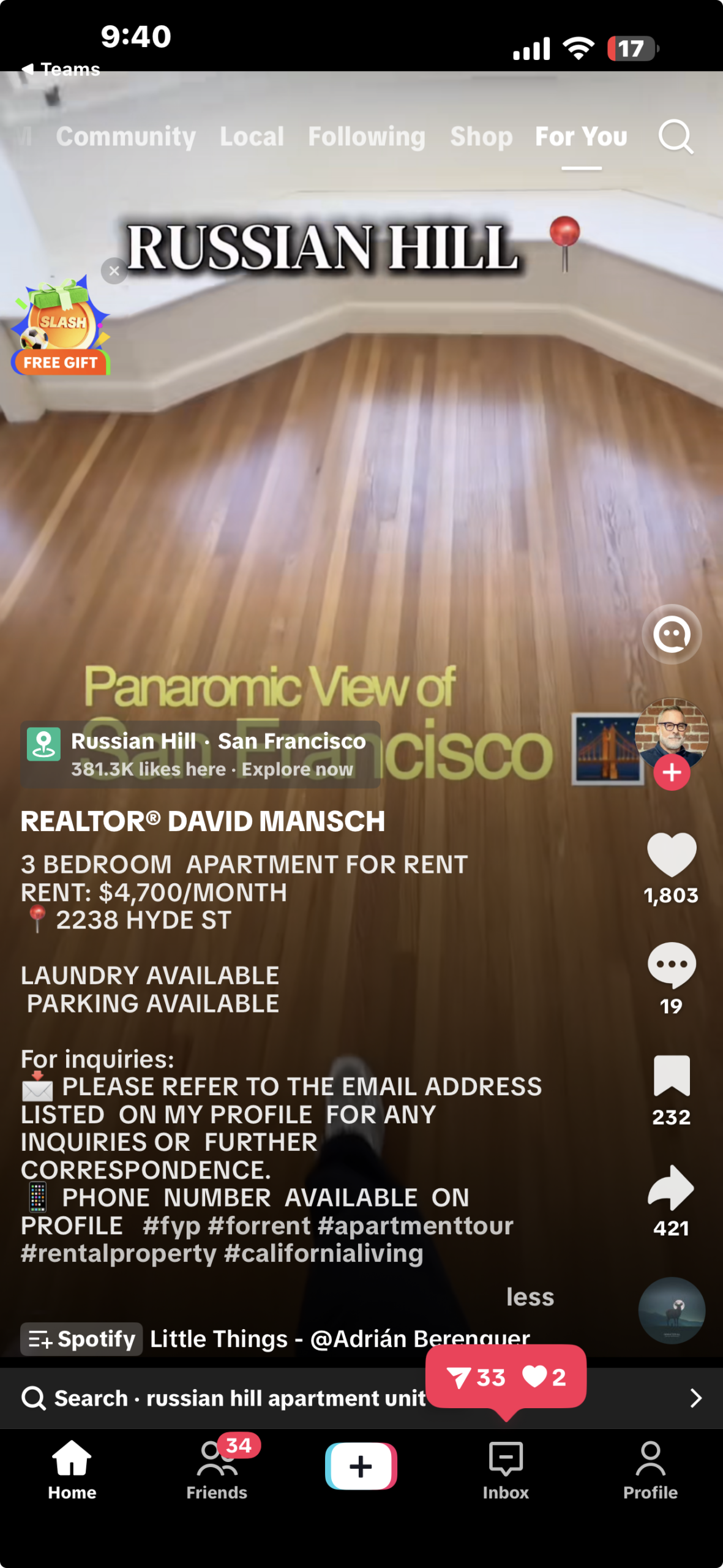
This happened to one of our own videos
A couple of weeks ago I posted a TikTok of one of our units. It did well, over 100,000 views. Then someone lifted the video, reposted it as their own listing, and priced the apartment at about half what we actually charge.
Our team looked into the account. The person running it had stolen the identity of a real, licensed agent at a well-known brokerage and was using his name to collect deposits. When the agent found out it was happening, there wasn’t much he could do about it.
So if you’d come across that listing, most of what you’d normally check would have come back clean. Real footage of a real apartment. A real agent with a license number you could look up. The only fake part was who’d be cashing your deposit.
What are the most common rental scams?
The hijacked listing. Someone copies a real listing’s photos, price, and address, swaps in their own contact info, and reposts it. Everything looks right because most of it is real. It just isn’t coming from whoever owns the place. This is what happened to our video.
The phantom rental. An apartment that doesn’t exist or isn’t for rent. Good photos, good price, nothing behind them. AI tools are making these fakes more convincing, so clean photography isn’t the reassurance it used to be.
The “I’m out of the country” deal. Priced low, and the landlord can’t show it. They’re overseas, it’s moving fast, they need a deposit wired today. Any version of “pay before you can see it” is the scam.
The self-tour scam. This is the sneaky one, because it gets past the advice everybody already knows. A scammer finds a real vacant unit with a smart lockbox, gets the code, and posts their own listing for it. You tour it. The address is real, the code works, nobody stops you. Then you send a deposit to hold it and it’s gone. Touring tells you the apartment exists. It doesn’t tell you anything about who’s collecting your money.
The credit-check trick. They ask you to prove you’re creditworthy through a link, often for a dollar, which quietly enrolls you in a paid membership they take a cut of. Real screening happens after you tour and apply.
Identity harvesting. Some of them don’t want a deposit at all. They want your SSN, your license, and your paystubs as a fake “application,” and then they disappear.
Who scammers actually go after
Scammers go hardest after the people who can least afford to lose: voucher holders, people coming out of homelessness, anyone searching with urgency and not many options. If that’s you, getting caught doesn’t mean you were careless. These are built to hit where there’s the least room to recover. You’re allowed to take your time, even when it feels like you can’t.
What are the red flags in a rental listing?
- The price is well under everything comparable nearby.
- They won’t show it live, or they only offer a self-tour.
- You’re being pushed to decide today.
- They want payment by wire, gift card, crypto, Zelle, or Venmo before there’s a lease.
- They want your SSN before you’ve toured.
- The listing is full of typos for something supposedly professional.
Any one of these on its own might be nothing. Two or three together and you have your answer.
How do I verify a rental listing is real?
This takes about five minutes.
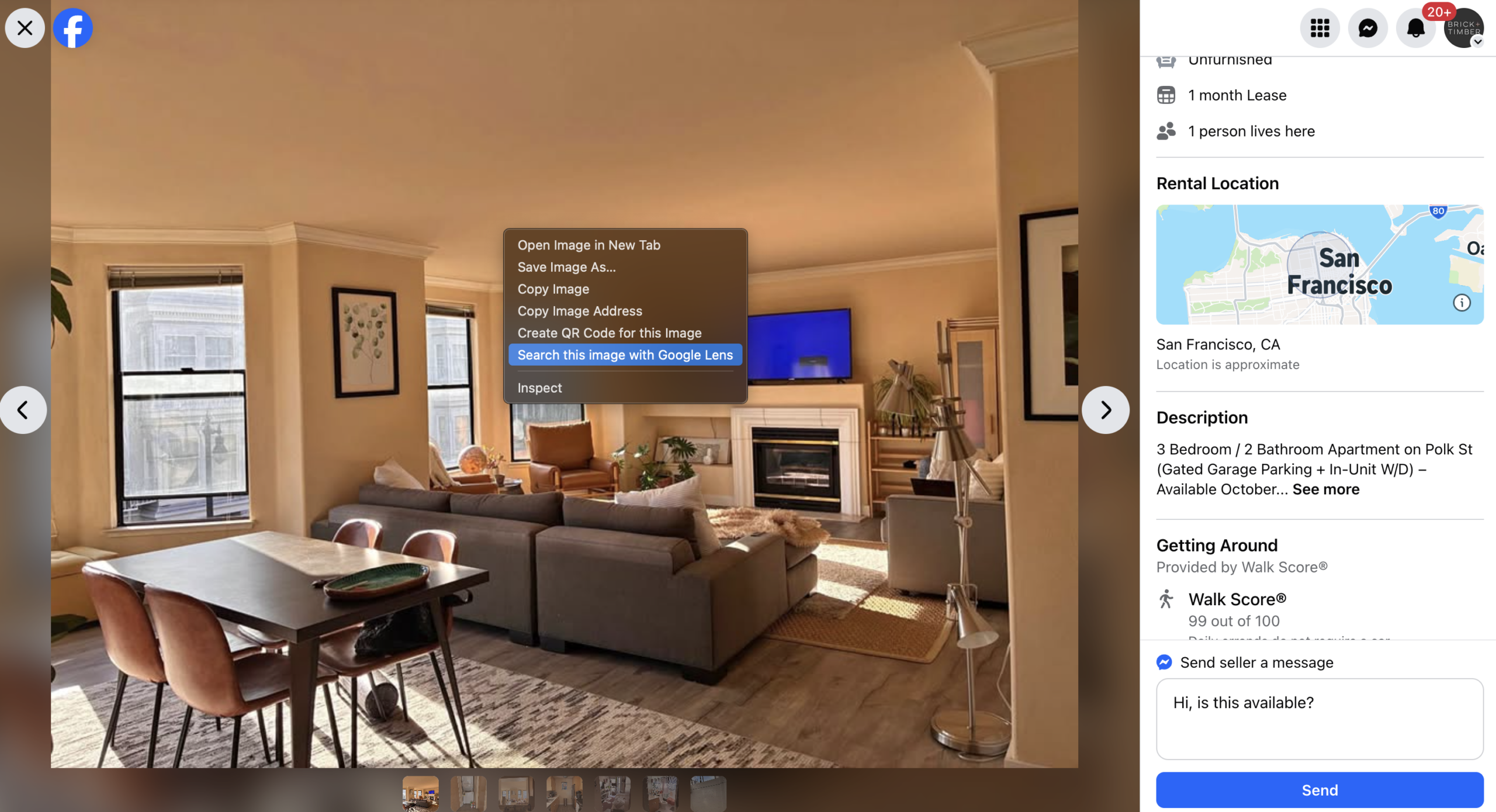
- Reverse-image-search the photos. If they turn up under a different name or on a for-sale page, you’ve caught a hijacked listing before you’ve said a word to anyone.
- Paste the address into Google, Zillow, and Redfin. If it’s for sale, or listed by a different management company, walk.
- Verify the person, separately from the apartment. This is the step that beats both the lockbox scam and what happened to our video. In SF you can look up who actually owns a property through the Assessor-Recorder’s Property Information Map: find the parcel, pull the most recent deed, check the owner’s name. If whoever’s asking for your deposit doesn’t connect to it, stop. And if they say they’re an agent, look up their license through the California DRE, then call the brokerage’s main line to confirm they work there. Not the number they gave you.
- Pay only through traceable methods, and only after you’ve verified. ACH, check, or card leave a record. Wires, gift cards, and crypto don’t, which is exactly why they get asked for.
What if I already sent money?
Walking away from a great deal costs you nothing. A real apartment with a real landlord is still there tomorrow.
If you did get hit, move fast:
- Call your bank right away. Depending on how you paid, they may be able to stop or reverse it.
- Freeze your credit with all three bureaus if you shared anything sensitive.
- Report it to the FTC at ReportFraud.ftc.gov, and file a report with SFPD.
Reporting can feel pointless in the moment, and it doesn’t always get your money back. It’s also how these patterns get tracked, which is part of how the next person avoids it.
At Brick + Timber we manage apartments across San Francisco, Parkmerced, and Berkeley. If you’re looking at one of ours and something doesn’t add up, call our office and ask. Same goes for any listing, anywhere. Nobody legitimate is going to be annoyed that you checked.
Sources
Federal Trade Commission, Rental scams hit home with $65 million in reported losses (December 2025): https://www.ftc.gov/news-events/data-visualizations/data-spotlight/2025/12/rental-scams-hit-home-65-million-reported-losses
Federal Trade Commission, FTC Analysis Shows Consumers Have Lost Millions to Rental Scams (December 2025): https://www.ftc.gov/news-events/news/press-releases/2025/12/ftc-analysis-shows-consumers-have-lost-millions-rental-scams
Federal Trade Commission, Rental Listing Scams (consumer advice): https://consumer.ftc.gov/articles/rental-listing-scams
NBC Bay Area / San Jose Spotlight, Rental listing scams in Santa Clara County: https://www.nbcbayarea.com/news/local/south-bay/rental-listing-scams/3752480/
Zillow, How to Spot Rental Scams: https://www.zillow.com/learn/how-to-spot-rental-scams/
San Francisco Office of the Assessor-Recorder: https://www.sf.gov/departments–assessor-recorder
